Back on the Beat
UND reintroduces Journalism degree.
A two-year Future of Local News Initiative found that original reporting from local newspapers remains the most trusted news source. It ranks higher than local television and far above social media or radio.
Those findings by the Rural Development Finance Corp. reflect a challenge across North
Dakota: a shrinking pipeline of trained journalists.
In 2024, UND reintroduced its journalism degree, enrolling 14 majors in its first
year back. The next year, that number grew to 32.
At the time, Soojung Kim, recently named dean of the School of Graduate Studies, was leading UND’s Department of Communication. She said conversations about restarting the degree gained momentum during the COVID-19 pandemic.
“Journalists are the first responders of information,” Kim said. “During the pandemic — especially with health-related misinformation — people were confused about what to believe. That made the role of journalism more visible.
“Even the smallest towns have firefighters and police officers. Journalists serve a similar role,” she said. “We need well-prepared journalists in every corner of North Dakota.”
The Department of Communication celebrated 100 years in 2024. “We have a passionate alumni network and a proven history of leadership in journalism education,” she said.
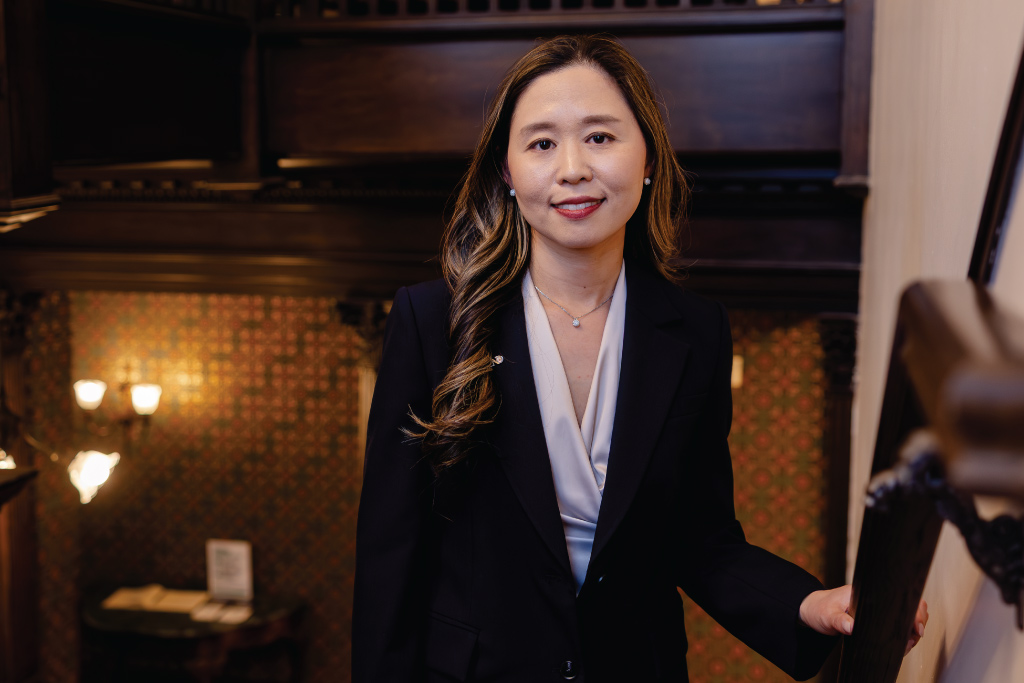
Soojung Kim said UND’s reintroduced journalism degree places a strong emphasis on ethics.
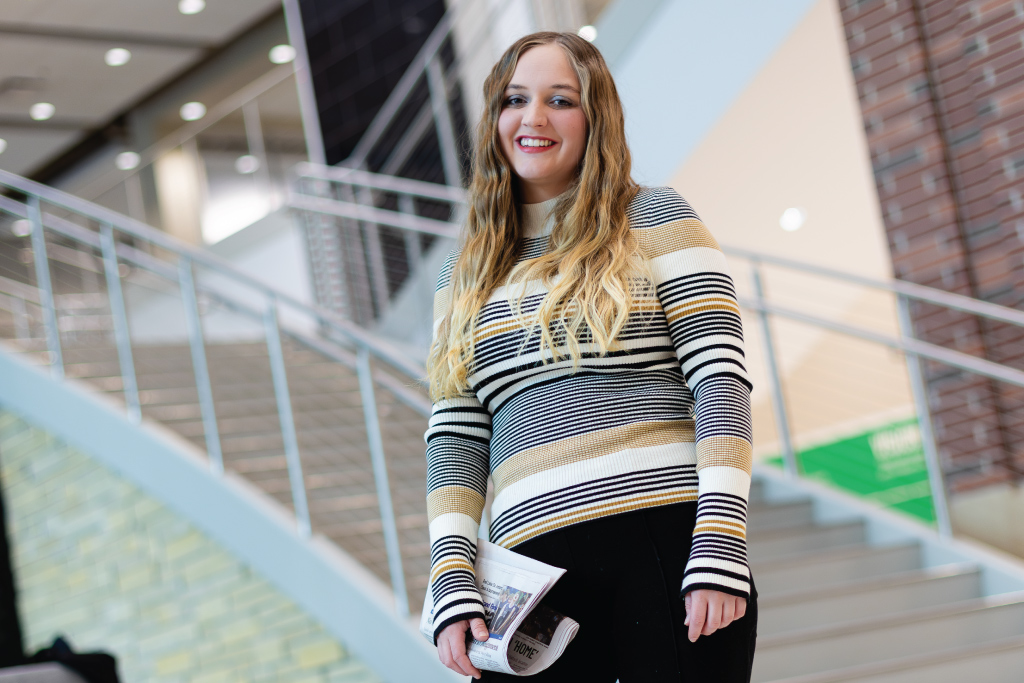
Madi Dame, ’25, was UND’s first graduate of the reintroduced journalism degree. She is pursuing a master’s degree in communication, working at UND Today, and is a career mentor at UND Career Services.
The Program Takes Shape
When deciding what to call the program, stakeholders considered more contemporary names, such as digital storytelling. They stayed true to UND’s past, calling it a Bachelor of Arts in Journalism.
The program focuses on core reporting skills while incorporating modern media applications. UND hired three tenure-track assistant professors and built what Kim described as “small but mighty” studios for video, podcasting, and visual journalism.
Newsroom leaders and professional organizations across the state emphasized the importance of ethics, Kim said. “They told me, ‘We need traditionally trained journalists — people who can write, ask good questions, and operate ethically. We can’t even hire general assignment reporters right now.’”
UND’s first journalism graduate, Madi Dame, ’25, said every class covered the Society of Professional Journalists’ Code of Ethics. “Professors would give us scenarios and ask how we would respond — not saying there was one right answer, but helping us think through the ethical implications.”
Learning the Craft
Dame’s favorite class was Social Media & Online Reporting. “We had assignments where we went out and talked to people, did person-on-the-street interviews, and wrote full stories.”
She applied that experience to her internship at the Grand Forks Herald. “On my first day, they had me calling people,” she said. “Just picking up the phone and calling someone was really outside my comfort zone.”
In two months, Dame wrote nearly 40 stories, significantly honing her reporting skills and gaining an appreciation for local news.
“Things happening around the world are important, but people also want to know what’s happening in their own communities,” she said. “Local news helps you understand what’s going on right where you live.”
We need well-prepared journalists in every corner of North Dakota.Soojung Kim
The Future of Journalism
Kim challenges the belief that journalism is dying and that students will struggle to find jobs. “Journalistic training prepares students for a wide range of roles we can’t even fully imagine yet,” she said.
Those roles will include the use of artificial intelligence. “If we look 10 or 20 years from now, AI’s going to be a core part of every industry,” she said. “How do we teach our students to adapt, but keep that ethical?”
As the only occupation protected by the Constitution, serving the public through journalism will require new ideas.
“We have to innovate,” she said. “I don’t know what it will look like, but I trust the faculty we hired. They will do it.”