Justice in Short Supply
Program introduces law students to rural practice.
Six North Dakota counties have no lawyers. Fourteen have only one.
Like much of the country, North Dakota faces what the American Bar Association calls “legal deserts”: counties with fewer than one lawyer for every 1,000 residents. Nationally, the average is nearly four.
Bradley Myers, interim dean of the UND School of Law, said North Dakota is experiencing what he called a “demographic trough,” a gap between incoming workers and retiring professionals.
“A 2024 American Bar Association survey found 18% of North Dakota’s lawyers intended to retire in the next two to five years, and another 8% were considering leaving the profession,” he said. “That’s a quarter of our attorneys. If our state has 1,600 lawyers, that’s 400 lawyers to replace. We don’t have that many graduates.”
UND will graduate 90 students during the 2025-26 academic year.
Without local attorneys, rural residents may need to travel long distances for basic legal services such as drafting a will, resolving a custody dispute, or navigating a divorce. Some rural counties lack prosecutors, defense lawyers, and judges.
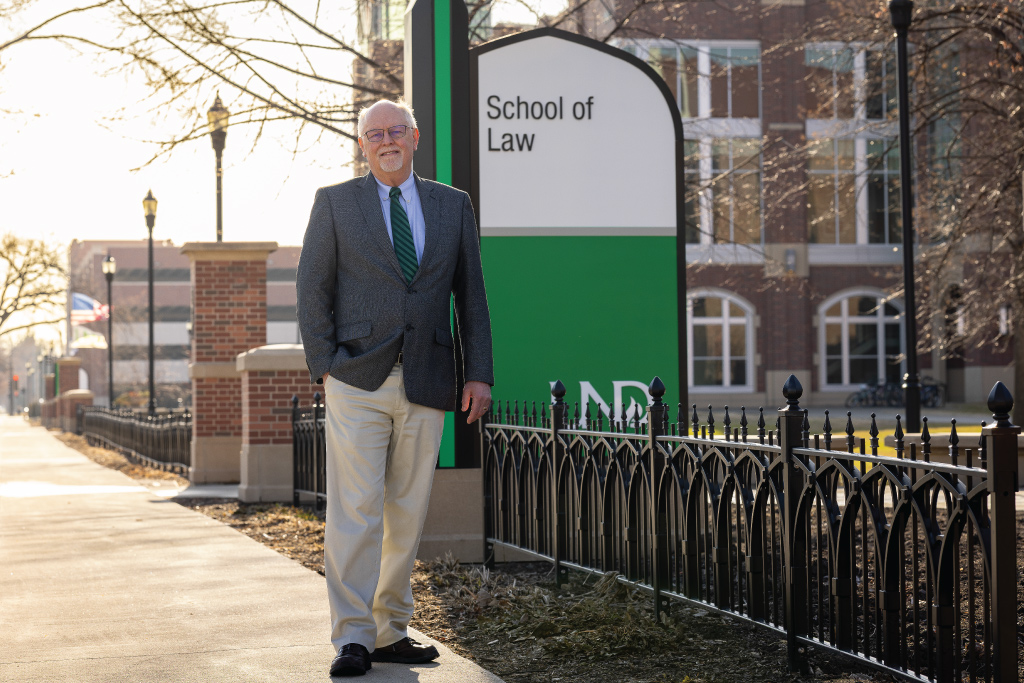
Bradley Myers said the Rural Justice Program gives students firsthand exposure to practicing law in rural communities.
The Rural Justice Program
To help address the shortage, the law school partnered with the State Bar Association of North Dakota and the North Dakota Court System to launch the Rural Justice Program in 2015. A grant from the Edson and Margaret Larson Foundation supports the program by helping students cover summer living expenses while working in rural law firms, state’s attorney offices, or indigent defense services.
What began with four students now places 10-12 each year.
“We’re subsidizing that experience so we can give students a chance to experience life in rural practice firsthand,” Myers said.
The effort comes as the UND School of Law prepares for new leadership. Retired Vice Admiral Darse E. “Del” Crandall Jr., former Judge Advocate General of the Navy, has been named dean following a national search and will begin July 1.
University leaders say his background in public service and legal leadership positions him to help advance the school’s mission — including strengthening the pipeline of attorneys serving North Dakota’s rural communities.
One reason I was motivated to go to law school was just the lack of attorneys that I saw where I grew up. I want to eventually go back to my community and contribute.Samantha Ledahl
A Path to Rural Law
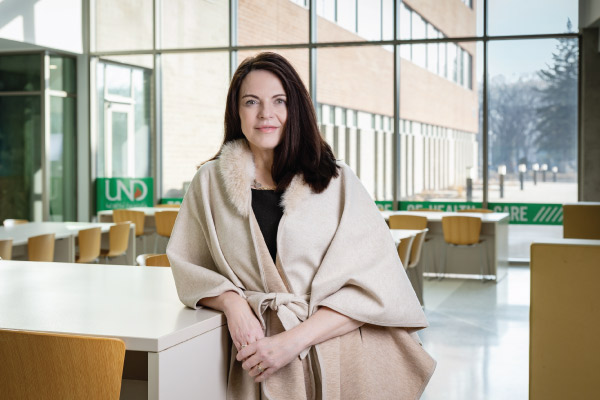
Samantha Ledahl, ’24, ’26, spent two summers in the program, gaining firsthand experience in two very different rural settings.
She began in Rolla, North Dakota, in the small private practice of Rachael Mickelson Hendrickson, ’14, ’18, ’20. There, she saw the breadth and demand of rural legal work.
“Those rural counties need people so bad,” Ledahl said. “You can get exposure to so many different things that you otherwise would have to wait years, if not decades, to see.”
She also appreciated the flexibility. Hendrickson worked from a home office while maintaining a steady client base. “You don’t necessarily have to have a brick-and-mortar office,” she said. “People will come to you because they’re so grateful for your service.”
The next summer, Ledahl moved to Stanley, North Dakota, to work in the Mountrail County State’s Attorney’s Office — just 75 minutes from where she grew up. The experience was fast-paced and wide-ranging. “In just one summer, I got to see a sentencing hearing for a murder, search warrants, child pornography, and domestic violence cases,” she said. “It was a perfect fit.”
After graduation, Ledahl will return to Mountrail County as an assistant state’s attorney. Her long-term goal is to open her own rural practice.
Myers said Ledahl’s outcome reflects the program’s goal — for students to build relationships with the community and the work, making them more likely to return.
So far, it’s working: nearly 80% of Rural Justice Program participants have stayed in North Dakota.