The Long Walk
Alumna crosses Alaska on foot.
For 26 days and 19 hours, Faye Norby, ’04, hauled a sled loaded with survival gear across Alaska. When she reached the finish line, she had become just the third woman to complete the 1,000-mile Iditarod Trail Invitational — the world’s longest winter ultramarathon — on foot.
Before reaching the 350-mile checkpoint, she’d already battled fierce winds, deep snowdrifts, and buried trails.
“I came in thinking, ‘Oh my gosh. Can I really do 600 more miles of this? I don’t know,’” she said.
A meal, a shower, clean clothes, and sleep provided the reset she needed.
Faye settled into the rhythm of the race, pushing each day to the next village or cabin. “Sometimes that’s 16 hours on the move, sometimes 22. We even had one 24-hour push,” she said.
Rest stops were hardly restful. Faye still had to gather firewood, melt snow for water, dry clothes, and eat before grabbing a few hours of sleep.
A heavy snowstorm made the final miles a challenge. “It was one of those warm storms where everything is wet,” she said. “I’d raced in those conditions before, so I knew what to expect. I still learned a few things.”
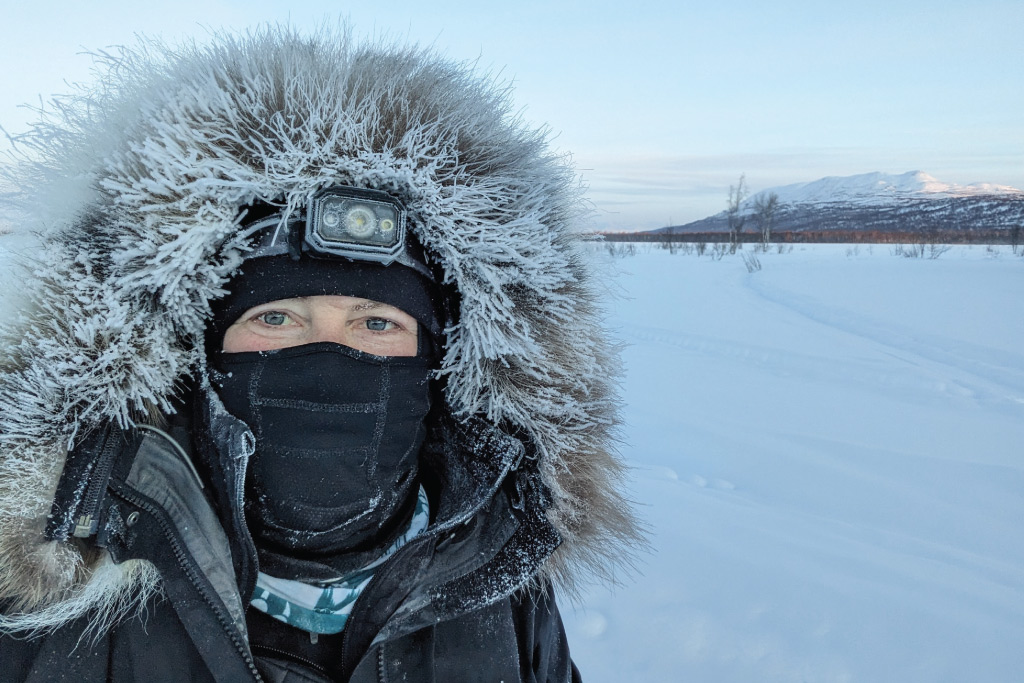
Faye at the start, ready to take on the elements.
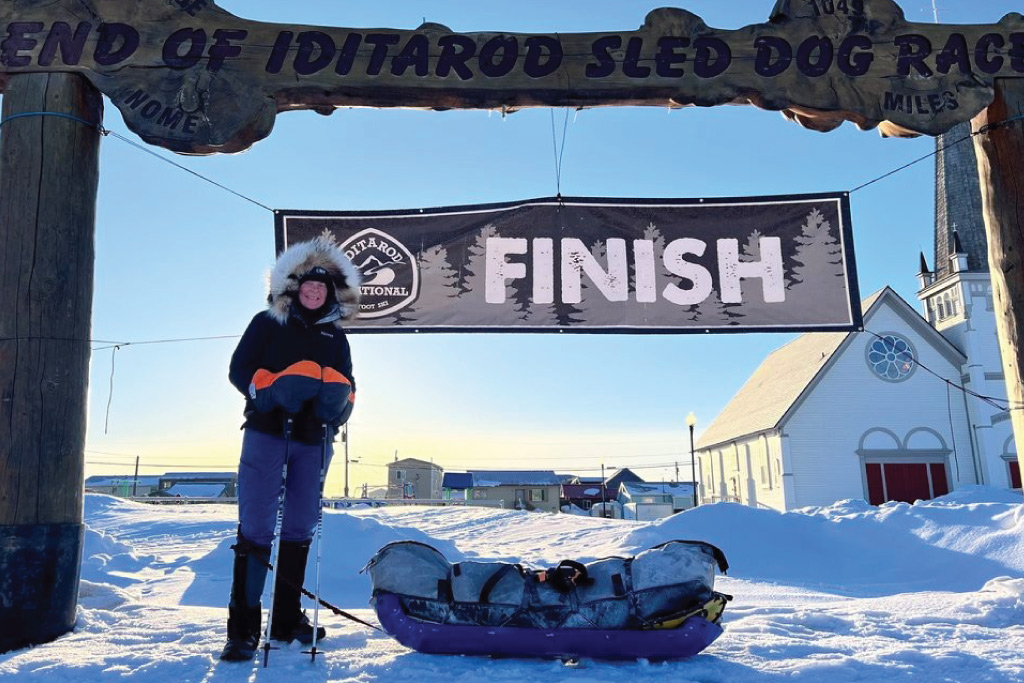
After 26 days, the finish line is a welcome sight!
Back in the Lower 48
Away from the trail, Faye is an epidemiologist and assistant professor at the University of Minnesota School of Public Health.
Despite recent challenges in the field, she’s optimistic, describing her students
as “scrappy, feisty epidemiologists” with skills that extend beyond traditional public
health.
Faye credits UND with launching her career. An undergraduate research scholarship
led to cardiovascular research as a freshman. By graduation, she had several publications.
“That really set me apart,” she said. “When I applied to master’s and Ph.D. programs,
I already had a strong research background. UND set me up for success.”
After earning two master’s degrees, the Des Lacs, North Dakota, native returned to
the Upper Midwest in 2010 and discovered trail running.
“Once I started trail running, I just kept going farther,” she said. “You make friends, and your friends are doing longer distances.”
Before long, she was racing winter ultramarathons — and eventually the Iditarod Trail Invitational.
She plans to return to Alaska in 2027 to tackle the race’s alternate southern route. But even if warm weather prevents running that route, the race is always different.
“I’ll see pictures from another year and think, ‘Wait, where was that?’ Then I realize I went through there in the middle of the night during a snowstorm,” she said. “It’s a completely different experience depending on the weather.”
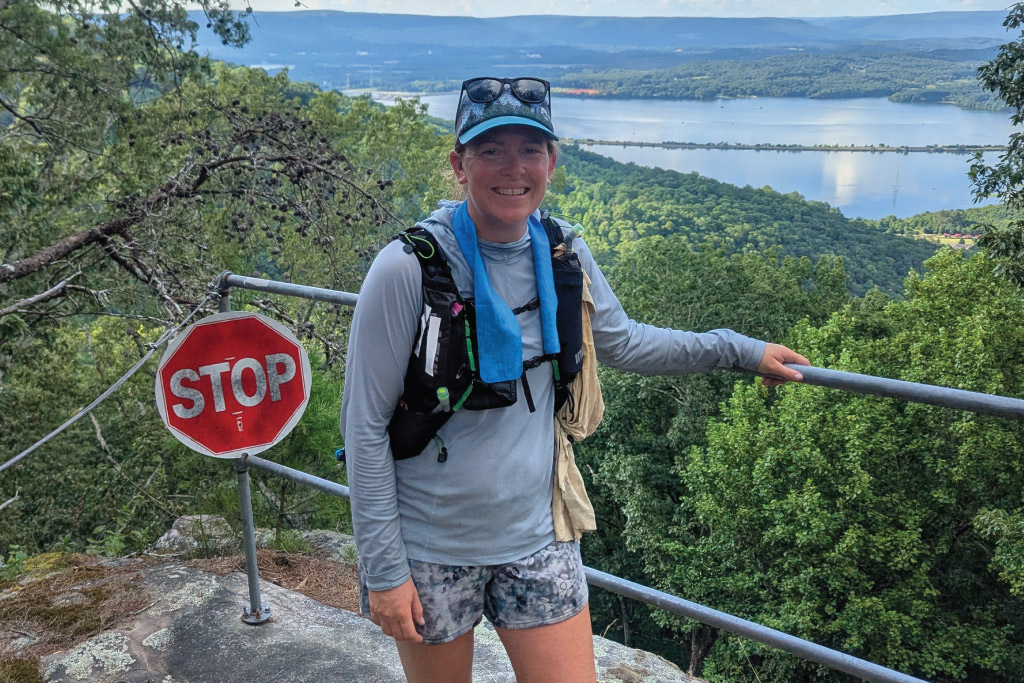
Faye races year-round but says summer ultramarathons require a completely different approach. “I just have a little pack, and whatever I need along the way, I’ll buy,” she said. “The challenge is finding the right balance between stopping to rest and maintaining my pace.”