UND Anywhere
As North Dakota employers search for workers, distance learning is helping the University of North Dakota strengthen the state’s talent pipeline.
North Dakota faces a historic workforce shortage, with only 47 workers available for every 100 open jobs. For UND, meeting learners where they are has long been part of the solution — from early correspondence courses to today’s flexible online programs. That century‑long commitment is keeping graduates in the state, attracting new talent, and expanding UND’s impact nationwide.
A Mission that Travels
UND’s long history of bringing education beyond Grand Forks.
Long before online courses existed, UND was reaching students who couldn’t come to campus. In 1911, the University launched correspondence courses, allowing learners across North Dakota to mail in assignments and opening access for rural communities.
By the mid-20th century, the program served nearly 1,000 students. Under director Beatrice Johnstone, Class of 1891, UND expanded its reach through traveling speakers, judges, musicians, and community courses, including citizenship preparation. It was an early model of UND’s long-standing commitment to meeting learners where they are.
Taking Education to the Students
Over the decades, delivery methods changed, but the mission stayed the same. Faculty taught in small towns, partnerships brought UND programs to regional colleges, and printed lessons eventually became recorded lectures on video cassettes and DVDs.
“We’re in a big, sparsely populated state,” said Jeff Holm, UND vice provost. “Online education is just the modern version of going to students instead of making them come to us.”
That foundation proved invaluable during the COVID‑19 pandemic, when UND already had the infrastructure others were rushing to build. “Even before the pandemic, roughly half our students were online,” then‑Dean of the College of Engineering & Mines Brian Tande told a reporter.
Holm noted that this approach aligns with the North Dakota University System’s vision to provide programs where and when people need them. “Online is a natural extension of UND’s mission.”
Online education is a major part of the modern delivery and availability of education. I think the state has to continue to invest in online education.Jeff Holm
Connecting to North Dakota
North Dakota produces about 7,500 high school graduates each year — not enough to meet workforce demand.
Holm believes online education can help fill that gap. “North Dakota’s long-term economic growth — whether we’re talking 20 years or 50 years from now — can’t happen based solely on our current population,” Holm said. “We have to bring people in. Online education introduces a large number of people to North Dakota.”
UND leads the state in online programs, enrolling students from across the country. Nearly 45% of online graduates work in North Dakota or the surrounding region.
“It doesn’t seem to matter much whether they came to campus or studied online,” Holm said. “There’s a similar return on investment in terms of graduates working in North Dakota, and that surprised the heck out of me.”
Strengthening the University
“Last fall, we offered about 1,000 online courses,” Holm said. “Without online students
from out-of-state, we would have had to cut 350 of those courses.”
In other words, UND’s online programs help maintain the breadth of courses available
to students on campus and across the state — keeping programs viable and classrooms
full.
“We’ve got something that’s built, that’s working, and that’s introducing people to the state right now,” he said. “Shouldn’t we try to use it more fully before deciding it doesn’t work and looking somewhere else?”
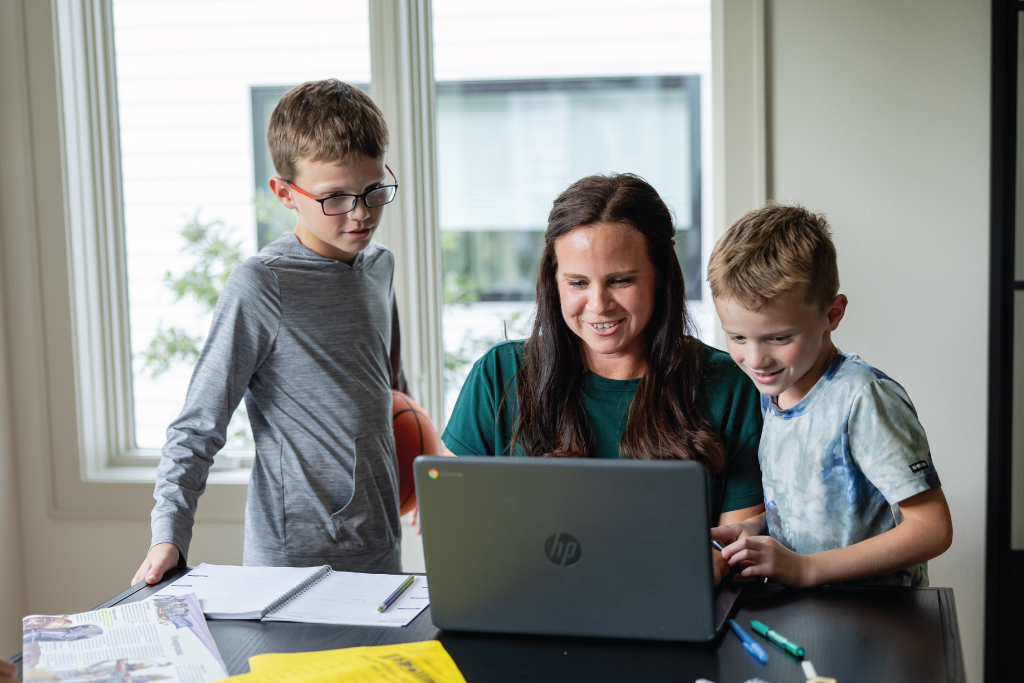
Online students log in from dorm rooms, hospital break rooms, military bases, and homes across the country. Undergraduate online learners resemble their on-campus peers in age and background, choosing online options for the flexibility to balance work, family, and academic demands.
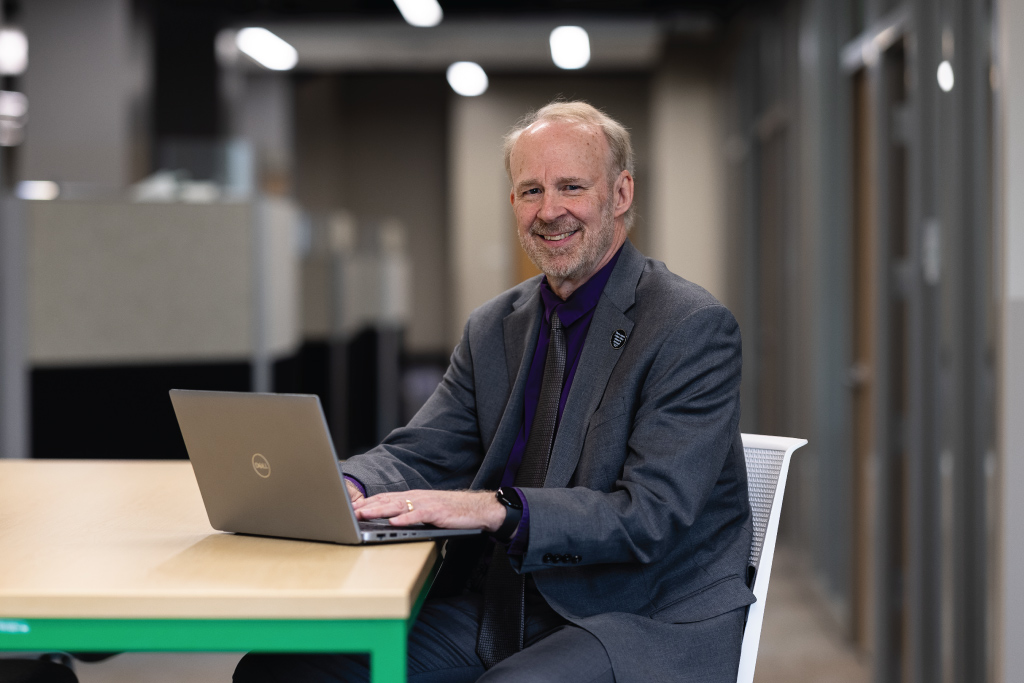
Jeff Holm sees online education as a way to bring people into the state. “North Dakota’s long-term economic growth — whether we’re talking 20 years or 50 years from now — can’t happen based solely on our current population,” he said. “We have to bring people in.”
Caring for Communities
Online programs help nurses build new skills while remaining at the bedside.
Hospitals across North Dakota struggle to recruit and retain nurses, but UND’s online programs are helping keep them in the communities that need them most. Fifty-nine percent of online nursing graduates work in North Dakota or the surrounding region, a reflection of programs designed for working professionals who cannot leave their jobs, families, or rural communities for advanced training.
While the Bachelor of Science in Nursing remains a campus cornerstone, RN-to-BSN and
graduate tracks allow nurses to advance where they practice.
“Where we’ve really thrived in the online space is in our graduate nursing programs,”
said College of Nursing & Professional Disciplines Dean Maridee Shogren, citing nurse
practitioner, certificate, and doctoral pathways, along with a hybrid nurse anesthesia
program.
“We cater to practicing registered nurses in our state who want to come back to school but are not able to pick up and move,” Shogren said.
Faculty see the impact of that model daily. Mary Jane Rivard, a clinical assistant professor and director of the post-master’s DNP program, said UND graduates shape the profession statewide — serving on boards and professional organizations, working with legislators and helping create healthcare policy.
Graduate students often take on applied projects that address immediate clinical needs. Kolton Jacobson, ’24, completed his DNP while working as a nurse practitioner, focusing his project on supporting internationally educated nurses in rural healthcare systems. He developed a toolkit to help leaders strengthen transition-to-practice programs. “In northern and rural areas of the Midwest, internationally educated nurses help fill a major gap,” he said.
I really liked that UND gave us chances to connect with professors. The faculty were constantly there, through classes, emails, and weekly announcements. You never really felt like you were just ‘online.’Kolton Jacobson
A Traveling Reputation
Sonya Anderson, ’13, director of the RN-to-BSN program, saw that need firsthand while
working as a travel nurse in more than 30 facilities across the state.
“Our hospitals need these nurses right where they are,” she said.
Rural nurses often take on wide‑ranging responsibilities, experiences that can strengthen
their applications to competitive advanced programs.
Anderson has seen how the University’s reputation follows its graduates.
“In many of the facilities where I worked, the first question was, ‘Where did you graduate from?’” she said. “When I tell them UND, the response is often, ‘We don’t have to worry about you.’”
Answering the Call for Rural Care
Eight nursing students are participating in Gero-STARR, a federally funded program preparing nurses to care for older adults in rural communities. Participants commit to working in North Dakota hospitals or long-term care facilities after completing the program.
“I take this work seriously. We’re educating the people who will care for me and my family, so it matters that they’re well prepared,” Shogren said. “Our students come in with a purpose, a desire to serve rural and underserved communities.”
That preparation is recognized far beyond the state. Tennessee Children’s Hospital allows only two nursing programs nationwide to send students for clinical experiences; UND is one of them.
“It speaks to the level of preparation and professionalism our students bring,” Anderson said. “Our students wear green scrubs. (When they arrive,) the staff will say, ‘Here comes the sea of green.’”
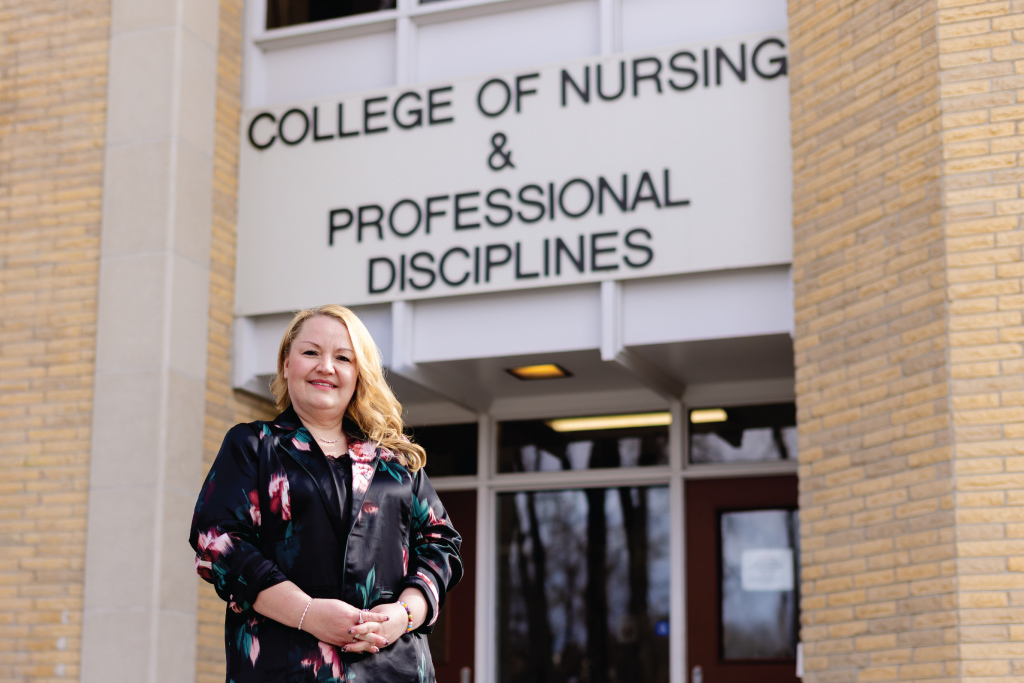
Sonya Anderson, ’13, began her education at a local community college with a strong pre-nursing program. A recruiter from UND’s RAIN (Recruitment and Retention of American Indians into Nursing) program encouraged her to continue her studies at UND, where she completed her four-year degree.
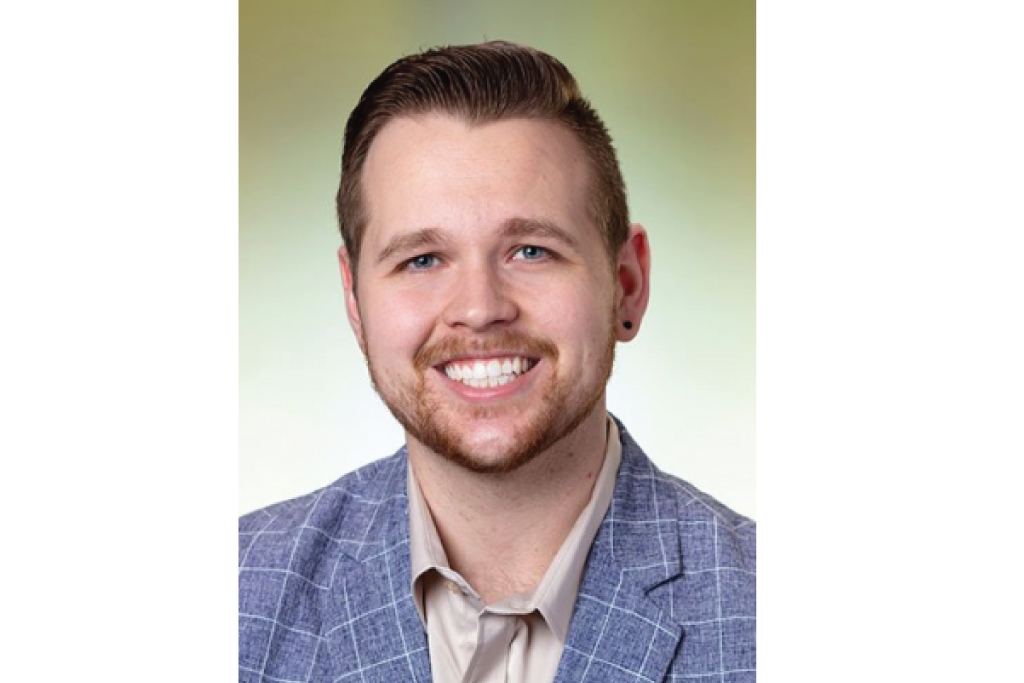
Kolton Jacobson, who lives in Elk River, Minnesota, is manager of medical education at VuMedi.
Engineers for the Future
Bringing new people and new partnerships to the state.
Engineering is UND’s largest online discipline. Each year, the University graduates about 500 engineering students — roughly half of them online.
“That’s significant,” said vice provost Jeff Holm. “If you’re a North Dakota company
recruiting engineers, you’ve essentially doubled the number of graduates available.”
Most online engineering students are part-time and stay in their programs for four
years or more, which Holm sees as an opportunity for employers.
“Students are going to log into our learning platform almost every day,” he said. “If a company partnered with a program, its activities could be used as examples of how course concepts are applied in the field. When that company needed workers, it would already have a connection for those students.”
The new UND STEM Complex will further strengthen that pipeline, giving students spaces to build and test designs in makerspaces, innovation labs, and collaborative environments.
“Students — even online students — want to be connected to a university with a physical presence,” Holm said. “The new STEM building will probably help us online as much as it helps us on campus.”
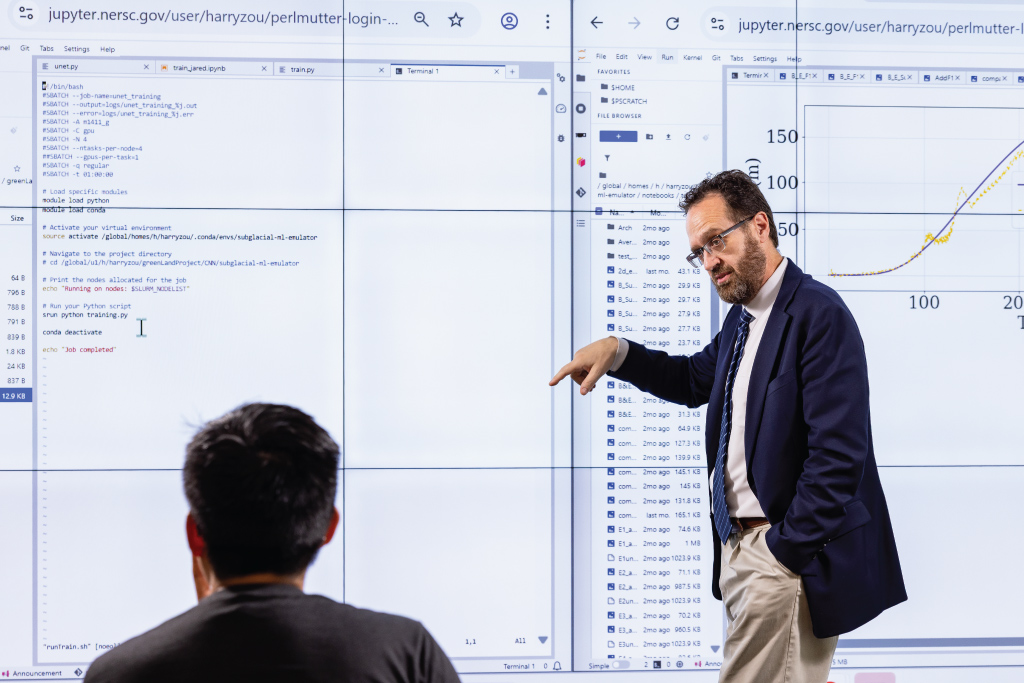
Ryan Adams said UND Engineering integrates online and on-campus courses, encouraging collaboration similar to real-world engineering practices.
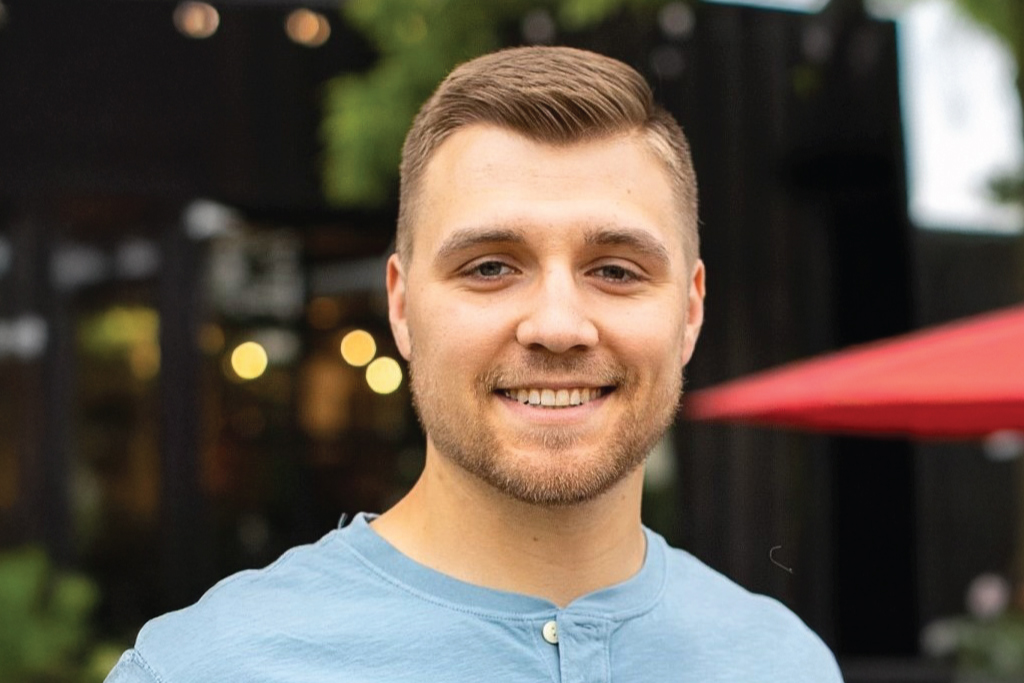
Tyler Midas is a Senior R&D Engineer in the Exploratory Interventional Heart Failure group at Boston Scientific.
A Closer Look at Collaboration
College of Engineering & Mines Dean Ryan Adams said UND’s online engineering programs stand out nationally for three reasons:
- Decades of experience delivering distance courses since the late 1980s.
- An entrepreneurial approach to building systems and training faculty.
- Full integration with the on-campus degree.
“About 90% of engineering colleges that offer online programs operate them separately from their campus programs,” he said. “Here, the diploma looks the same because they meet all the same requirements.”
UND engineering classes are recorded directly from on-campus classrooms, allowing online students to join live or watch later.
“You can certainly feel the difference,” said Ph.D. student Tyler Midas, ’24, a Senior R&D Engineer at Boston Scientific in Minneapolis. “Even if you can’t watch them at 11 a.m. because you’re working, you still get the live experience later. You can see the professors read the room and adjust their content. You still hear the in-class questions, and those are helpful.”
Adams said his college is intentional about assigning a mix of students to project teams, reflecting how engineers work today.
“The vast majority of engineers meet the way we’re meeting right now. They collaborate with people all around the world. Being able to bring all those disciplines together is extremely important.”
Most online students are required to travel to Grand Forks for lab experiences, which introduces out-of-state students to UND, and sometimes North Dakota itself.
Adams recalled one online student from Iowa. “When he came to campus for the lab, he had such a great experience that he moved to Grand Forks and transitioned to an on-campus student,” he said. “We see those kinds of examples very often.”
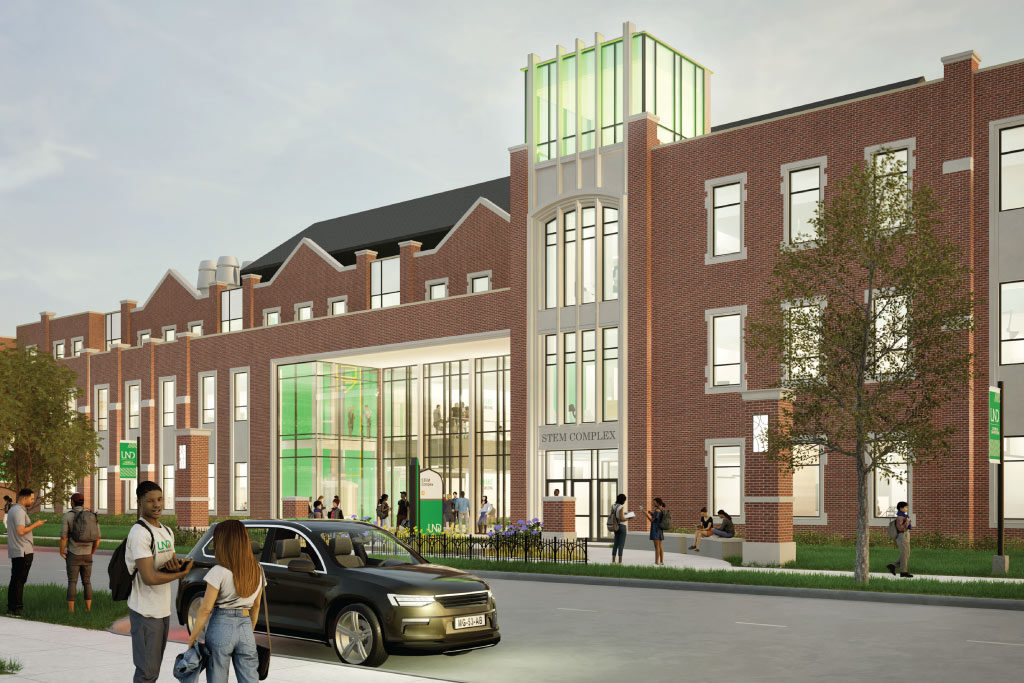
Phase I of the UND STEM Complex will be completed during the summer of 2028 and will
be
open for classes in Fall 2028. (Architect rendering)
Expanding UND’s Reach
A Ph.D. student working at the Naval Surface Warfare Center in Maryland helped open doors for UND — leading to Office of Naval Research funding and stronger ties with federal partners, from the Air Force and National Guard to the unmanned aircraft systems industry.
“We end up getting partners, neighbors, friends that want to come here because of the capabilities that we have,” Adams said.
Midas agreed. “Being able to make these connections advances the science. And in my field, advancing science means advancing the quality of people’s lives.”
My job is purely research work. This type of position in the industry is hard to find; they are few and far between, and they’re hard to land when you do find them.Tyler Midas
The Principal Pipeline
Preparing educators to lead schools across North Dakota.
North Dakota’s annual principal turnover rate is nearly 40 percent — a sign of the
growing demands placed on school leaders, especially in rural communities.
Strong leadership directly impacts student success.
“There is an implicit connection between the effectiveness of the principal and student learning outcomes,” said Laura Link, associate professor of Teaching & Leadership and director of UND’s Master of Science in Teaching & Leadership program. “When principals are supported and effective, teacher success rises and student learning rises with it.”
Link helped design UND’s Aspiring Principals Pipeline, an online-plus-residency master’s
program built to prepare and retain school leaders across the state.
Coursework is delivered online so educators can remain in their districts. A three-semester
residency places them alongside practicing principals five days a week.
“The breadth of experiences is wider than a student teaching experience,” Link said. “It’s more like a medical residency.”
“Growing leadership talent from within gives us a greater likelihood of retention, because they’re already part of the community.”Laura Link
Mentors Matter
Mentorship is central to the program. In addition to academic advisors and principal mentors, students work with residency coaches — experienced principals who provide guidance from outside the students’ home schools.
One of those mentors is longtime Grand Forks Red River High School Principal Kris Arason, ’92, ’01, ’17, who was recently named assistant superintendent of secondary education for Grand Forks Public Schools.
“You don’t realize how many unique situations you’ll face,” Arason said. “Families, counselors, social workers — you’re part of a close team supporting students. They may want to talk through things they don’t feel comfortable bringing to their direct supervisor. That’s where mentorship really matters.”
All 10 participants completed the 30-credit program while serving full time in North Dakota schools. Eight moved directly into principal or assistant principal roles the following academic year.
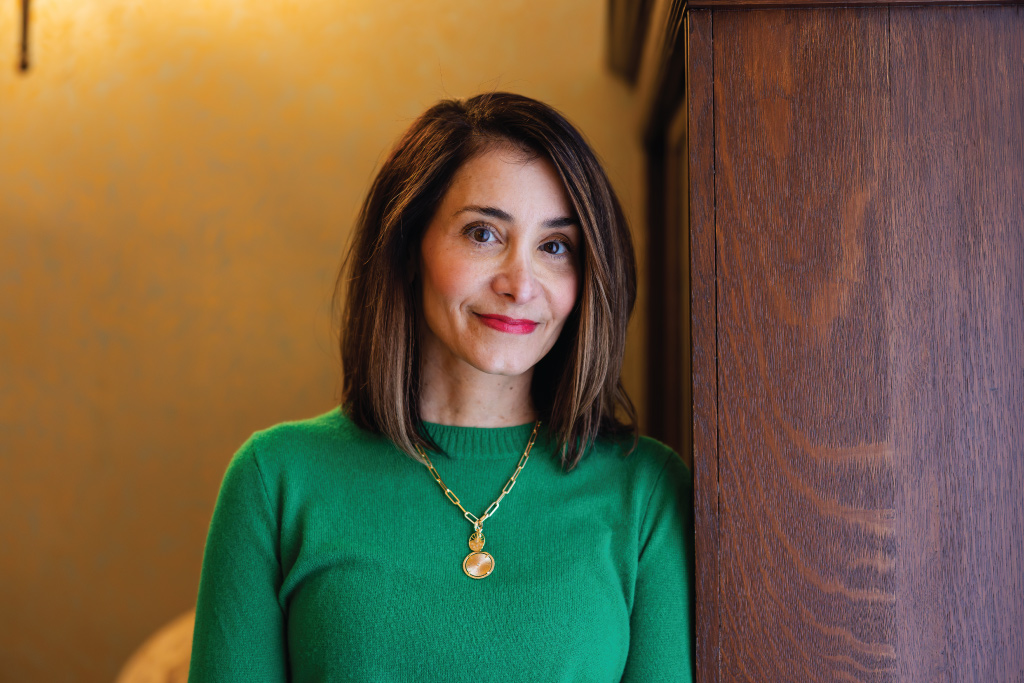
Laura Link helped design the Aspiring Principals Pipeline.
From Classroom to Leadership
For Valley Middle School associate principal Amber Basting, ’25, the residency revealed
the full scope of the job she was preparing to take on.
A 14-year veteran of the Grand Forks Public School District, she spent a decade as
a special education teacher and three years as a coordinator before entering the pipeline.
“Knowing the ins and outs of how our district operates gives us a leg up when we move
into leadership roles,” she said.
She expected difficult parent conversations and challenging student situations. What
surprised her were the bigger picture responsibilities. The yearlong residency allowed
her to experience the full cycle of a school year, from August hiring decisions to
February morale challenges and master scheduling. It prepared her to help lead through
a transition into a new building during her first year as associate principal.
“In our partner districts, we now have well-equipped aspiring principals ready for the role — not someday, but now,” Link said. “That’s how we turn a 40 percent turnover rate into something North Dakota’s students can count on: stable, prepared leaders who know their schools, know their families, and aren’t going anywhere.”
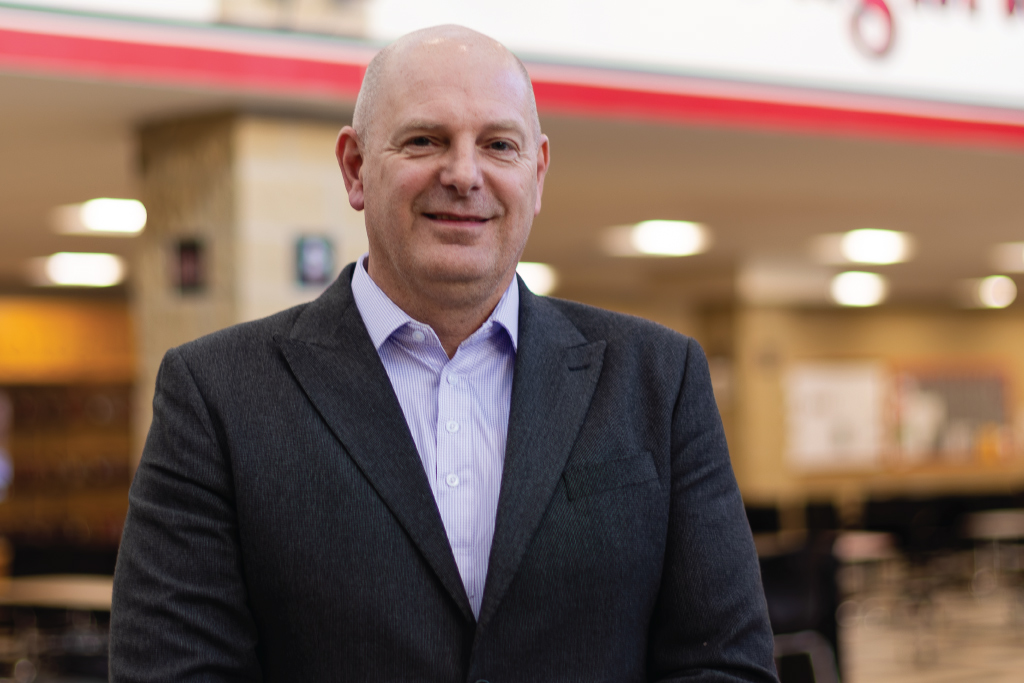
Kris Arason, a program mentor, said he serves as a “trusted sounding board.”
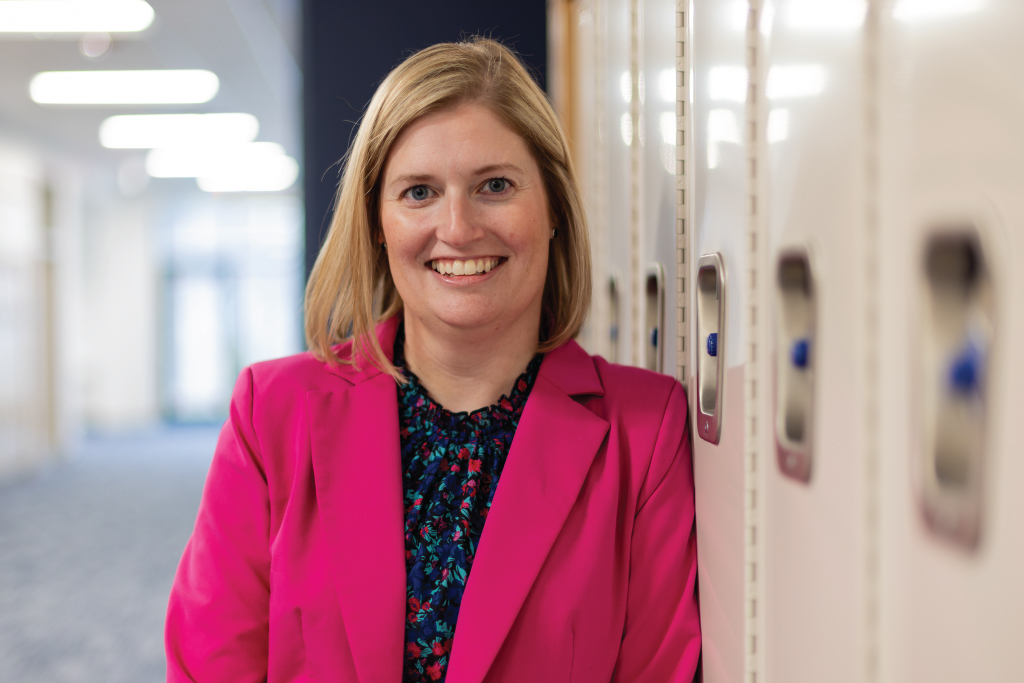
Amber Basting became associate principal at Valley Middle School after completing the Aspiring Principals Pipeline. “I felt like I could reach out with anything — no matter how random,” she said.
We Serve Those Who Serve
Educating students from mission control to military bases.
From mission control in Houston to military bases overseas, UND students are earning
degrees while working in some of the world’s most demanding environments.
That reach is especially visible in two communities long connected to the University:
the space industry and the U.S. military.
A Space Education Pioneer
UND’s Space Studies program introduced distance education in 1996.
“We have been pioneers in something that many started with COVID,” said Pablo de León, director of Space Studies. “When others had to transition, for us it was business as usual.”
Today, about 90% of UND’s Space Studies students study remotely. Many already have a bachelor’s degree but want to specialize in space. Family commitments, full-time jobs, and military deployment prevent them from coming to campus.
“We try to make it possible for them to finish their master’s or Ph.D. We work with them, maintaining all the academic rigor while being online.”
Coursework in Mission Control
Many Space Studies graduates work across the space industry — training as astronauts, developing spacesuits and lunar landers, contributing to the first commercial space station, and more. Current Ph.D. student Jeremy Raush understands that balance.
Raush serves as the Guidance, Navigation and Control lead for NASA’s Artemis II mission in Houston.
As the mission grew closer, he temporarily stepped away from coursework.
“I have taken several courses at UND that directly relate to work I have been doing for Artemis II,” he said. “Being able to apply what I’ve been learning at UND to my work has been invaluable.”
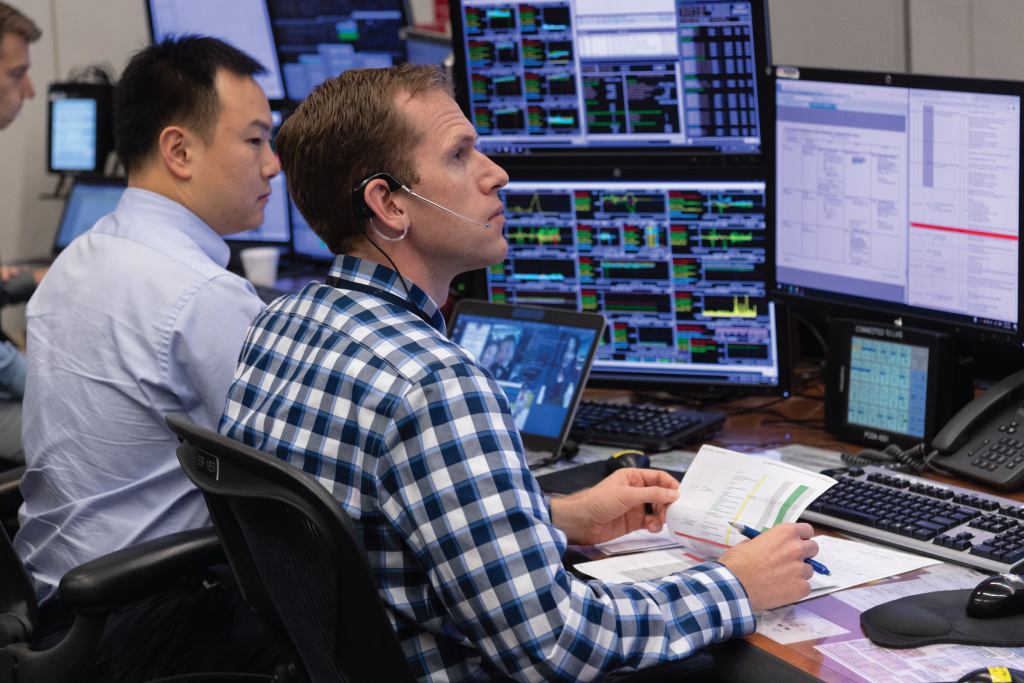
Jeremy Raush, a current Space Studies student, paused his coursework to focus on the Artemis II mission.
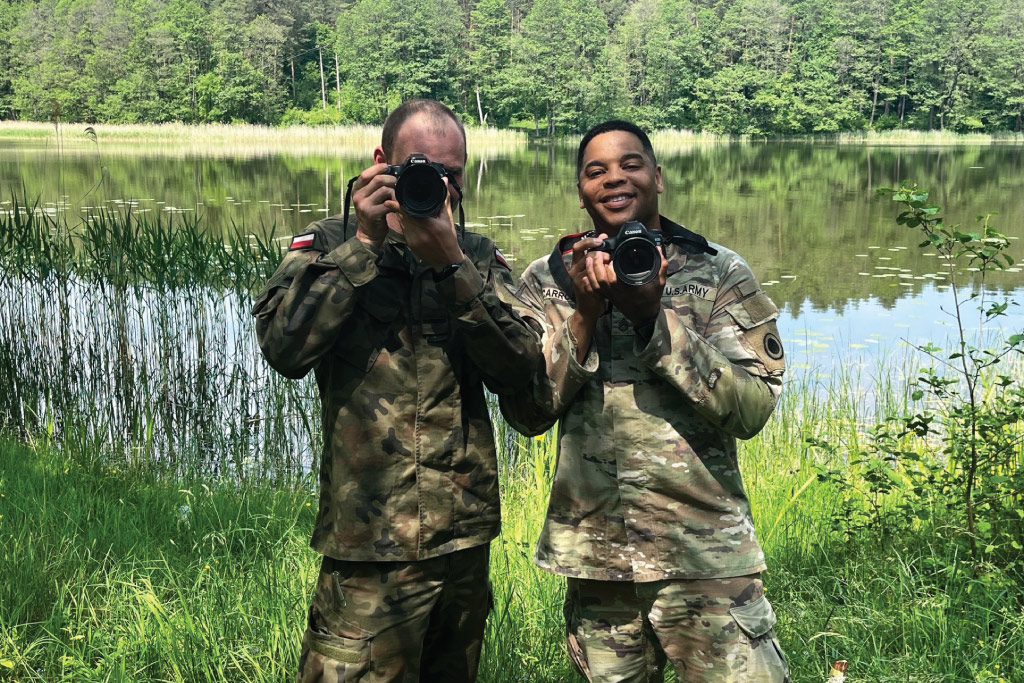
Staff Sgt. Walter Carroll, who earned a Ph.D. in Communication, chose UND for its online format.
Serving While Studying
Many students continue their education while serving in the military.
When Russia invaded Ukraine in 2022, Staff Sgt. Walter Carroll, ’25, was deployed to Poland just months after being admitted to UND’s online Ph.D. program in Communication. Unable to complete coursework, his GPA fell below the required 3.0.
Many students continue their education while serving in the military.
Soojung Kim, dean of the School of Graduate Studies and former chair of the Department of Communication, petitioned for his reinstatement. “We saw potential for him to be a successful Ph.D. student and admitted him to the program,” she said. “It’s our responsibility to honor that promise.”
She supported Carroll throughout his degree journey and was emotional after his dissertation defense. “I know how difficult it was … But he never gave up.”
A Military-Connected Campus
Carroll’s experience reflects UND’s broader military community.
Last semester, 2,001 military-affiliated students — including 108 on active duty and veterans — were enrolled at UND, roughly one in seven students. About 34% study online, including active-duty service members, veterans working full-time, and families navigating frequent relocations.
“Walter is a success story of how well-connected our internal network for military support is,” said Angie Carpenter, director of the Office of Veteran & Military Affairs. “Students aren’t working in silos. No matter where they reach out for help on campus, the goal is for everyone to recognize that we do have support.”
Online education is central to that support. “We often have students serving in North Dakota who get orders to serve elsewhere,” Carpenter said. “Rather than disrupting their education, they can shift to an online option, which supports both their military obligation and their education.
“And wherever they go, they represent UND,” she said.
Gold Standard
Since establishing the Office of Veteran & Military Affairs in 2020, UND’s military-affiliated student population has grown by 41%, and the University has earned national recognition for its work. UND was named the 2026 recipient of the Colleagues’ Choice Innovation Award from the Western Academic Leadership Forum and received Gold recognition as a 2025-26 Military Friendly® School, placing it among the top 10% of institutions nationwide.
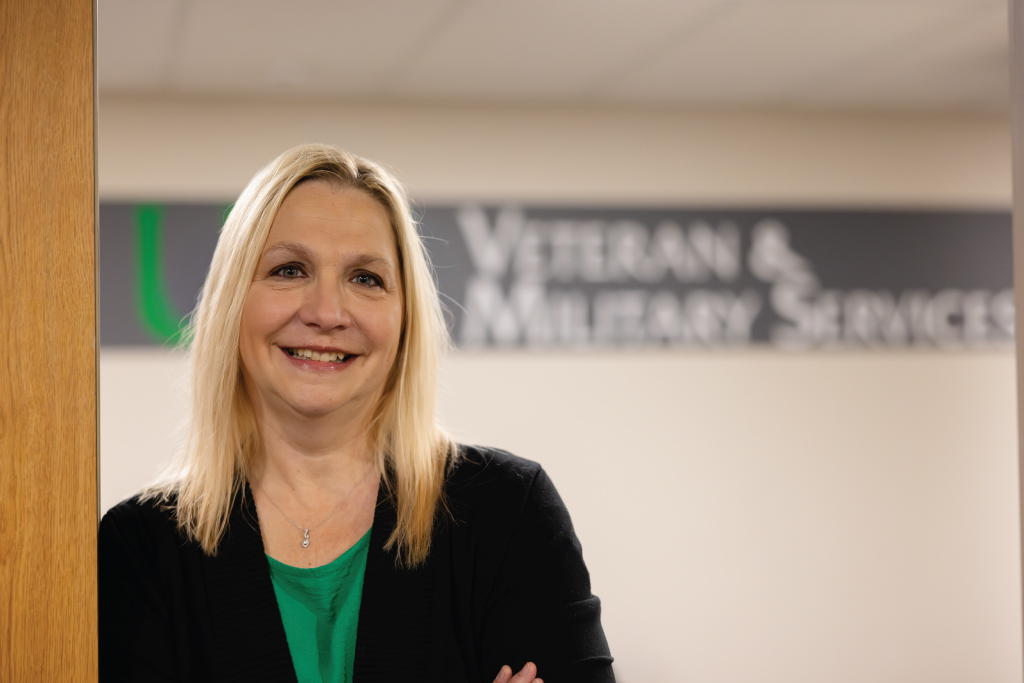
Angie Carpenter said that wherever UND’s online military students are, they highlight the quality of the education in North Dakota.
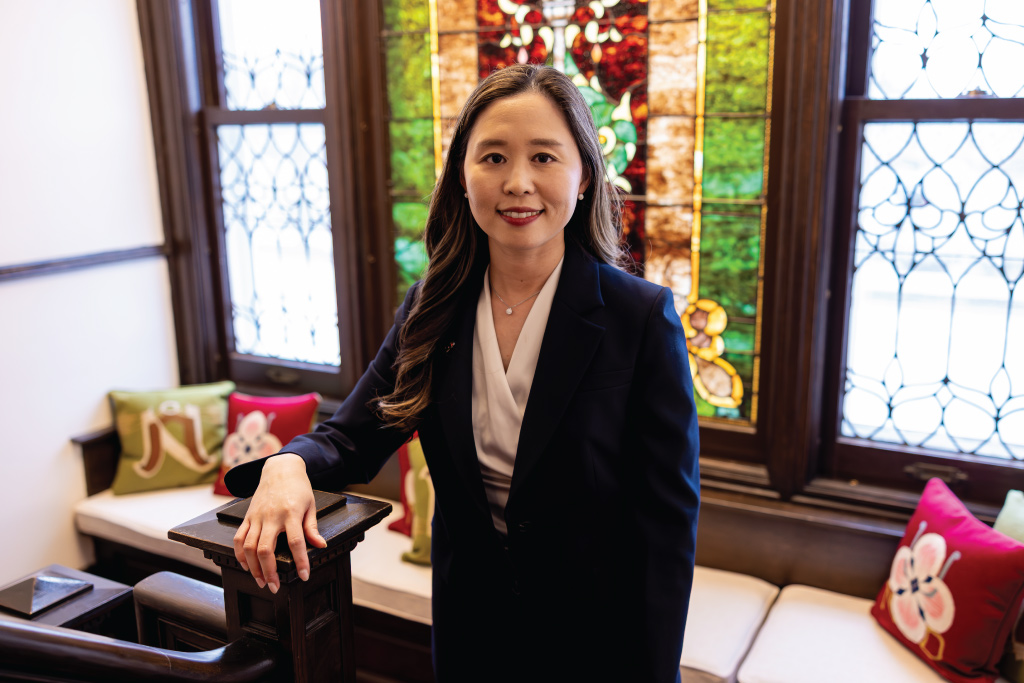
Soojung Kim honored the school's promise to support Carroll throughout his degree journey.
The Flagship Serves the People
For more than a century, the University of North Dakota has practiced distance education — bringing learning to students wherever they are.
Today, online courses help students fit classes around internships, labs, clinicals, and demanding schedules. Beyond Grand Forks, they allow professionals to advance their education while remaining in the communities that depend on them.
The tools have changed. The mission has not.

Paige Jones, a UND online engineering student, competed at the 2026 Olympic Games as a Team USA ski jumper. On-campus student athletes also take advantage of online classes.
Student-Athletes Online
Online courses give student-athletes the flexibility to balance practices, travel,
and competition without falling behind academically.
“I’ve noticed that once some athletes get a taste of online learning, they realize
they can manage their time differently,” said academic advisor Andres Freeman.
That support shows in the numbers: UND Athletics holds a combined GPA of 3.45, marking 35 consecutive semesters above 3.0. Online options also help athletes from warmer climates adjust to North Dakota winters — sometimes by simply avoiding a long walk across campus in the cold.