2026 Alumni Honors: Stacie Bell, Ph.D., ’91
When Stacie (Froelich) Bell, ’91, was in just third grade, she watched her grandmother endure chemotherapy. It was then that she set a lofty goal: to find better treatments.
Five decades later, Stacie has devoted her career to advancing cancer and autoimmune disease research.
“Much of the work that I’ve done is understanding how the immune system interfaces, and how the cells in the body respond abnormally to create or grow cancer,” Stacie explained. “For autoimmune diseases, it’s understanding how cells begin to attack the body, how the immune system reacts, and how we can tone that down to improve the lived experience of those with autoimmune diseases.”
Her path into medical research began at UND.
“I had all these ideas, and I would go to professors and say, ‘I’d like to do this.’ And all those professors took the time and the chance and enabled that.”
While Stacie appreciated many teachers — from her hometown of Valley City, North Dakota, through graduate school at Vanderbilt University School of Medicine in Nashville — UND Chemistry Professor George Brushmiller stands out. As a freshman, she wanted to study how fiber intake affected cholesterol levels, and he encouraged her to pursue it. The research led Stacie to collaborate with faculty across chemistry, biology, dietetics, and medicine. Her UND experiences led to opportunities as a National Science Foundation fellow and an intern with 3M’s Medical Therapy Division.
She went on to earn a Ph.D. in biochemistry at Vanderbilt under the advisement of Dr. Neil Osheroff, who promoted collaboration and built on the multidisciplinary approach developed at UND, including opening the door to work with Merck & Co. on cancer therapies.
Over the course of her career, Stacie has worked across academia, biotechnology, the pharmaceutical industry, and nonprofit organizations. In one of her most recent roles, she served as Chief Clinical Research Officer for Lupus Therapeutics, the clinical research arm of the Lupus Research Alliance. There, she helped connect patients, researchers, advocacy organizations and industry partners to accelerate the development of new therapies for people living with lupus and other autoimmune diseases.
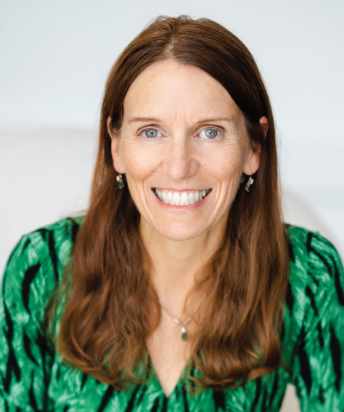
Stacie’s recent career move allows her to focus on what matters most, professionally and personally. She’s volunteering, and learning German and how to swim.
Connecting Pharma and Philanthropy
Stacie recently “pivoted” to lead Froelich Pharma and Philanthropy. She serves as a clinical research and strategy advisor while helping define the role nonprofits can play in drug development.
“I want people to understand that pharma and philanthropy are directly connected,” Stacie said. “The only way one or both can be successful is to partner.”
Thousands of nonprofits support patients with conditions ranging from autoimmune disease and cancer to asthma and kidney disease, Stacie said. Most are small organizations with five or 10 employees and often are unsure how to influence the drug development process.
To help bridge that gap, Stacie launched NODE (Nonprofit Organizations and Drug Development Efforts), a collaborative initiative that brings together nonprofits, industry, venture capital, and pharmaceutical companies. The group develops resources and practical guides to help organizations engage more effectively and ensure patients’ voices are heard throughout the drug development journey.
Stacie is also a co-inventor on a newly filed patent exploring microbiome-based treatments for autoimmune disease and supports a biotech company studying similar approaches for infectious disease, cancer, and autism.
She’s most proud of her work’s human impact. “It’s making a difference for that lived experience — whether that was cancer early on in my career, or now focusing on autoimmune diseases such as lupus and Sjogren’s disease and inter-related immunology.”
Stacie remains grateful for her amazing supportive family and friends, and her alma mater. “UND made a real difference for this North Dakota kid,” she said. “This award reflects the connection, opportunities and confidence UND helped make possible.”
I’ve made the biggest impact in my career by being a connector and building meaningful collaborations.