A Purpose Beyond Practice
Some people spend a lifetime choosing causes to support. For Dr. Julie (Bjerke) Blehm, ’79, ’81, the causes chose her.
A Type 1 diabetes diagnosis during college. A daughter with an intellectual disability. The death of her husband, David, by suicide in 2011. Each experience altered the course of her life. Rather than retreat from those challenges, Julie turned them into opportunities to help others.
“It was quite devastating to me,” Julie said of her daughter’s diagnosis. “It took me a while to really adjust to that, and then losing David to suicide. Those are things that are life-changing.”
For Julie, they became reasons to act.
Her advocacy work spans volunteering with the American Diabetes Foundation, involvement with Special Olympics, and advocating for suicide education and prevention among physicians.
In 2025, those efforts earned her North Dakota’s Copic Humanitarian Award.
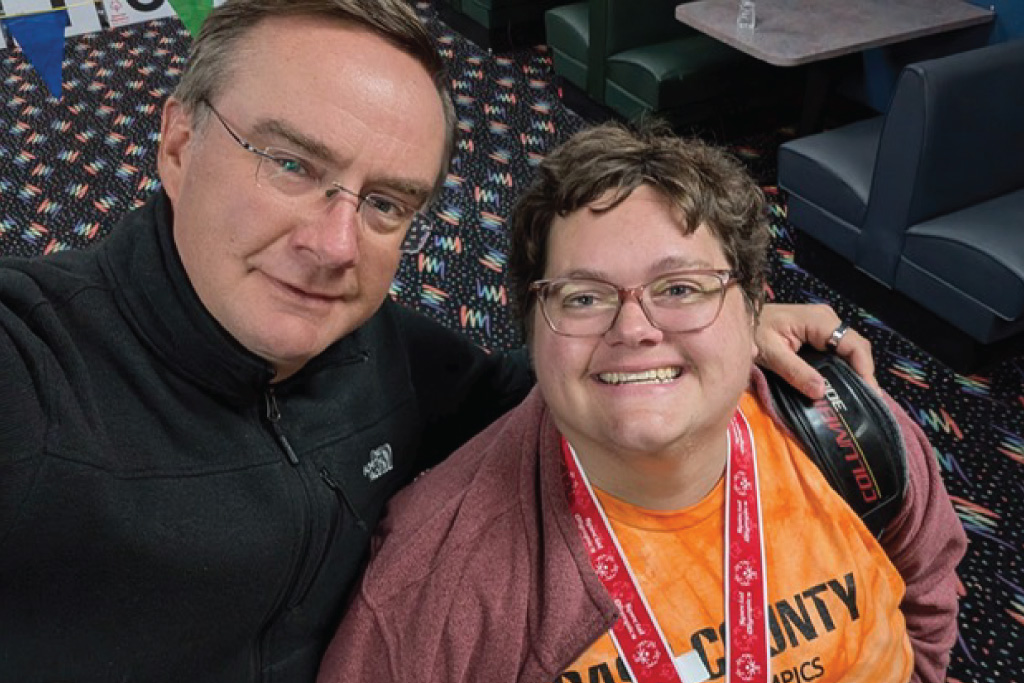
Ben Blehm celebrates with his sister, Amy, after a Special Olympics race.
Finding Ways to Help
Julie’s first cause was personal. Diagnosed with Type 1 diabetes during college, she took time to learn to manage the disease before pursuing medical school.
While practicing medicine in Minot, North Dakota, she became involved with the American Diabetes Association and served on its North Dakota board. Every third summer, she devoted a couple of weeks to Camp Sioux, a camp for children with Type 1 diabetes.
When the Blehms moved to Fargo in 1999, where Julie became director of UND’s internal medicine residency outpatient clinic, the family found a new opportunity for Amy. Then a sixth grader, Amy began participating in Special Olympics. By 2009, Amy competed at the Special Olympics World Winter Games in Idaho.
“It was just so good to see that group of people compete and feel proud of themselves because they’re often left out of things,” Julie said.
Two years later, in November 2011, Julie’s life changed again. Her husband, David, a pediatrician, died by suicide.
Shortly after his death, Julie was invited to apply for the Special Olympics World Games medical team. Despite everything she was going through, she applied and was selected.
“I was still working full time, and David had just died, but I got it done,” she said.
Julie’s first assignment took her to the 2013 World Winter Games in South Korea. She has since served on the medical team at six World Games, including Austria, the United Arab Emirates, and Germany.
Volunteering and philanthropy have helped me heal from David’s suicide.Dr. Julie Blehm
Suicide Prevention
Before David’s death, Julie didn’t know the American Foundation for Suicide Prevention (AFSP) existed. She initially ignored a friend’s suggestion to attend an AFSP support group, but months later, she went.
“That support group was incredibly helpful,” Julie said. “You could say whatever you were thinking, and no one was shocked.”
The experience helped her become more comfortable talking about David’s death. “It wasn’t easy for me, right away at all, to accept that my husband died by suicide and to talk about it,” she said.
David had been struggling with alcohol, but resisted getting help. As a physician, he feared seeking treatment would follow him every time he renewed his medical license.
“My whole response made me realize the stigma and how many people in the medical community are really scared to say, ‘I’m struggling. I need help.’”
Julie wanted to help change that. Through North Dakota’s AFSP chapter and SafeSide, she and Sara Dukart, a psychiatric mental health nurse practitioner, began presenting a suicide-prevention training program for healthcare professionals throughout the state. Julie also teamed with Dr. Robert Olson to talk with first-year medical students about physician depression and suicide.
“We knew that early in medical school, a lot of people start struggling,” she said.
She also joined the board of the new North Dakota Professional Health Program, giving healthcare professionals facing physical or mental health challenges a confidential path to seek help — something Julie never encountered during her own medical training.
“In my day, those things were never even mentioned in medical school anywhere,” she said, “not just in North Dakota.”
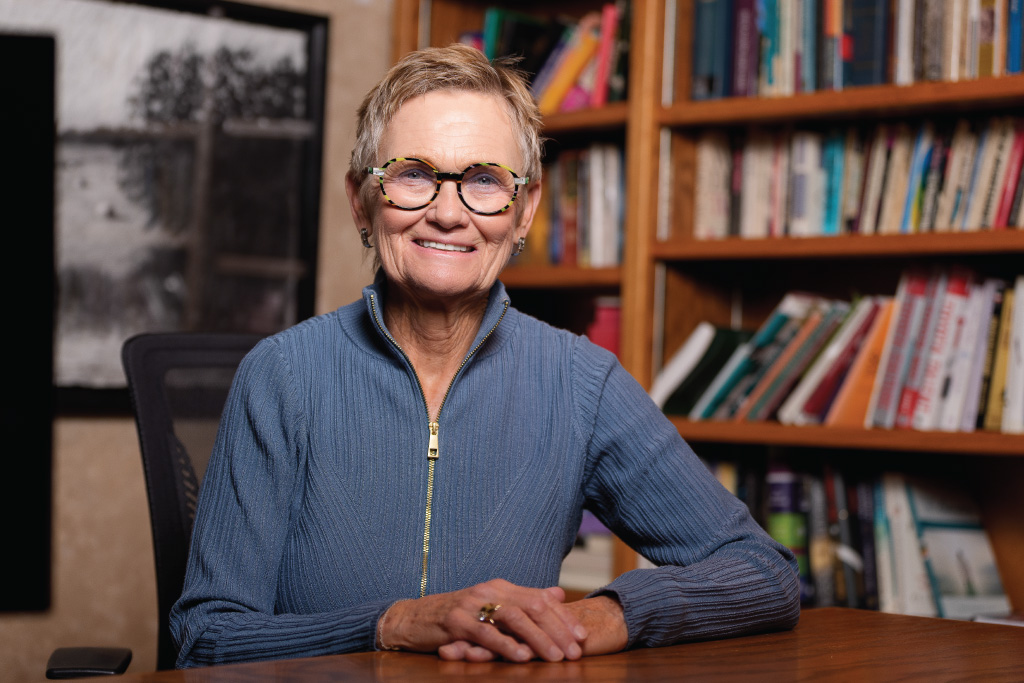
Dr. Julie Blehm has benefited from her volunteerism. "Every single thing I’ve done, I’ve met people who are now friends and who I enjoy.”
Giving Back
More than 40 years after graduating from medical school, Julie’s service was recognized with North Dakota’s 2025 Copic Humanitarian Award.
“I was stunned,” Julie said. “It just reinforced my belief that it’s important to give back to the community. “
The award came with a $10,000 donation to a healthcare-related organization of Julie’s choice. She chose the AFSP’s North Dakota Chapter.
“It was very satisfying and fulfilling to be recognized,” Julie said. “But I would have done those things even without the recognition.”
Staying Connected
Julie still shares her expertise with medical students, occasionally covering the resident clinic in Fargo and participating in simulations and evaluations at the UND School of Medicine & Health Sciences in Grand Forks.
“I like working with the young people. They’re so bright. It’s just a fun group to work with,” she said. “I hope I’m teaching them something, but I learn a lot from them too.”