Behind the Lens
Fabrice Moussus has captured some of history's biggest moments.
Fabrice Moussus, ’73, had recently arrived in Cairo as an ABC News cameraman when he watched a crowd of journalists scramble for a spot on an Army truck.
It was November 1980, and the press was covering the opening of the tunnel under the Suez Canal. Everyone wanted the best position to capture Egyptian President Anwar Sadat’s arrival.
Fabrice didn’t join the rush. “That’s when I heard, ‘Hey, come. You can ride with me.’”
It was Sadat.
Fabrice climbed onto the sideboard of the president’s car and rode with him through the tunnel. Sadat even stopped to let Fabrice off to shoot additional footage.
“That says a lot about his personality,” Fabrice said. “He was not conventional.”
Less than a year later, on Oct. 6, 1981, Fabrice was again covering Sadat, this time at a military parade in Cairo. His camera was pointed toward fighter jets overhead when he heard gunfire.
“You hear bullets going by, hear the hand grenades, and the temptation is to duck,” Fabrice said. “But I decided to suppress all my personal feelings and concentrate on the images.”
He ran toward the podium, parallel to the gunmen. When they reached the reviewing stand, one — standing about 10 feet away — turned his weapon toward Fabrice. The two made eye contact.
Fabrice ducked behind a wall but kept his camera rolling. He counted to five, looked up, and saw the gunman running away.
He later learned the gunman had run out of bullets.
Fabrice was the only cameraman to capture footage of Sadat’s assassination.
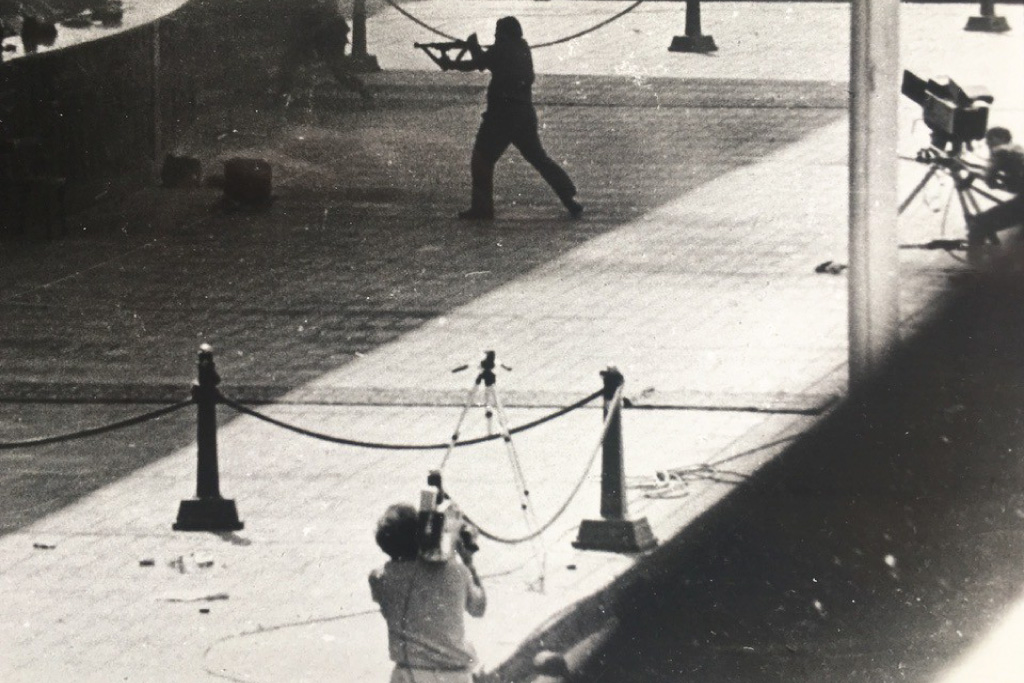
Fabrice captured exclusive footage of the assassination of Egyptian President Anwar Sadat on Oct. 6, 1981.
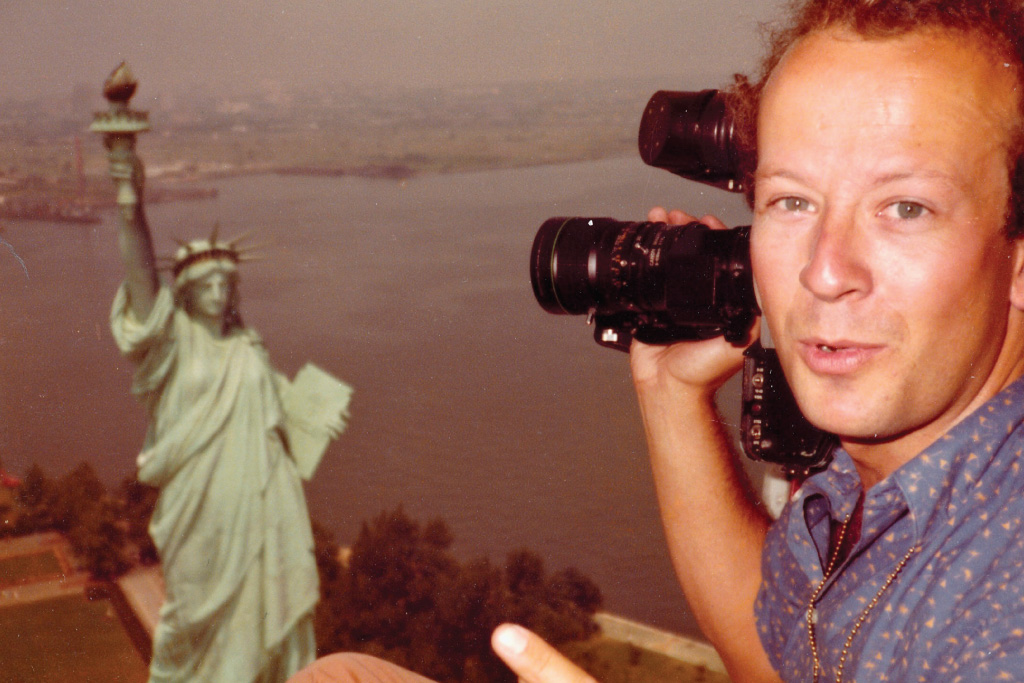
Fabrice’s assignments often required him to spend six to eight hours a day filming from a helicopter.
A Long Way from Home
How Fabrice ended up behind a camera in Cairo begins in Grand Forks, North Dakota.
Growing up in France, Fabrice knew he wanted to study journalism. His high school
English lecturer, Bill Huggins, was from Grand Forks and suggested he apply to UND.
“I had no idea about the University of North Dakota, but I filled in the papers and
was accepted,” Fabrice said. “On top of that, I got a scholarship.”
After traveling from France — including a 64-hour bus ride from New York to North Dakota — Fabrice arrived at UND facing a new country, a different language, and an unexpected challenge: typing.
“We used shorthand in France, so I was terribly slow,” he said.
After UND, Fabrice attended graduate school at Syracuse University, where he had access to the latest television equipment.
“I did a little bit of radio, writing, producing, and it felt good to be behind the camera,” he said.
He worked at a small television station in Utica, New York, before landing in New Haven, Connecticut. When his news director left for ABC News, an opportunity for Fabrice soon followed.
Once at ABC, Fabrice wanted to work overseas. With his international background and
language skills, it was a natural fit. He didn’t expect the opportunity to be in Egypt.
“The call came that there was an opening in Cairo, and I had 24 hours to make up my
mind,” he said.
He didn’t need that long.
“I like to take risks, and it was a new discovery.”
North Dakota was an interesting place to be. It broadened my horizons.Fabrice Moussus
The Only Video
A decade after Sadat’s assassination, Fabrice scored another major exclusive.
When the U.S.-led coalition began bombing Baghdad on Jan. 17, 1991, Fabrice knew Iraqi security would search the hotel. While other journalists headed for shelter, he and his sound man hid their equipment, climbed into the shower, and pulled the curtain.
Security officers entered the bathroom, but they didn’t look in the shower.
From the hotel roof, Fabrice used a night-vision scope to capture the opening bombardment
in green-and-white images.
“We (ABC) had the only video,” he said.
Fabrice’s footage was smuggled out to Jordan and transmitted on a satellite used by CNN. CNN aired the images, and viewers assumed they belonged to the network. The network even used them in its promos.
Years later, a CNN correspondent joked with Fabrice: “I want you to know that you’re the most well-known cameraman at CNN.”
His Own Assignment Desk
More than 20 years after relocating to Cairo, Fabrice covered his last major event
for ABC in Kurdistan in 2003.
By then, he said, network news had changed.
Fabrice would do the career all over again if he could do it under the same conditions,
but today, he doesn’t feel the same connection to the industry.
Now, he divides his time between Paris and Lisbon, and runs his own assignment desk.
“I assign myself trips,” he said. “I decide where I want to go and how long.”
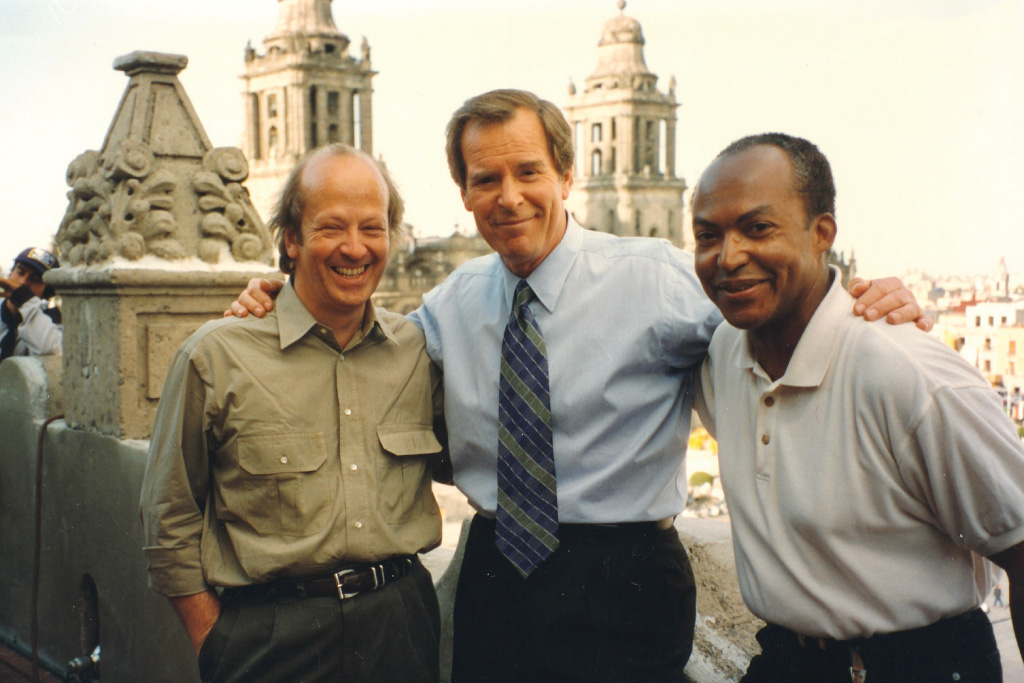
Fabrice is pictured here with ABC News' Peter Jennings in Mexico City.
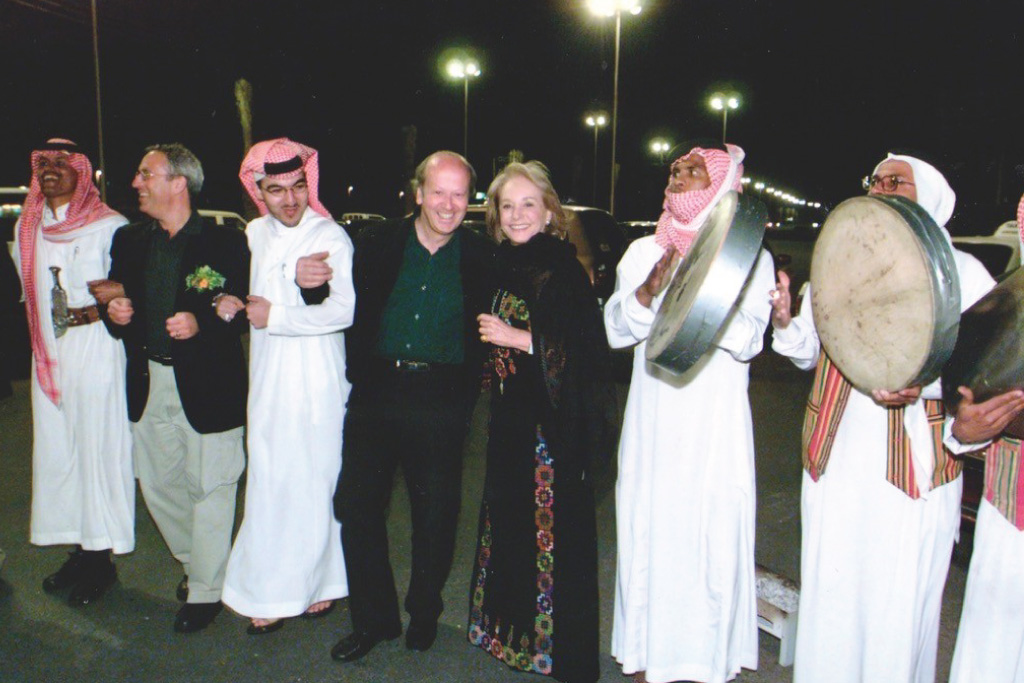
Dancing in the streets of Saudi Arabia with Barbara Walters.
Trusted Behind the Camera
Fabrice earned the trust of some of television news’ most recognizable journalists, including ABC anchors Peter Jennings, Ted Koppel, Barbara Walters, and Diane Sawyer.
He recalls accompanying Jennings on several foreign assignments. “He was a well-read
person, and he really knew his subjects.”
Jennings also had what Fabrice described as an “aura.”
“Peter would walk into a room, and everybody would go, ‘Wow!’”
During a 2002 assignment with Walters in Saudi Arabia, she felt their large crew was getting in the way of the story and asked that only she and Fabrice continue.
The two traveled into the desert, where they were invited into a Bedouin tent. By the end of the evening, a local band was playing. “Barbara and I were dancing on the street in Saudi Arabia,” Fabrice said.
Fabrice credits his success to instinct, or as he said, his ability to “Grab the Moment” — the title of his 2022 memoir.
“It was part of my personality,” he said. “I had the right instincts, the right reaction. I could see how I could get the pictures and the video and not really get in the way.”